Following particles inside a flow
Mineral-processing systems combine fluid motion, particle transport, and contact with equipment. My work used computational fluid dynamics (CFD) and the discrete element method (DEM) to investigate these interactions, with experimental particle tracking providing a route to validation.
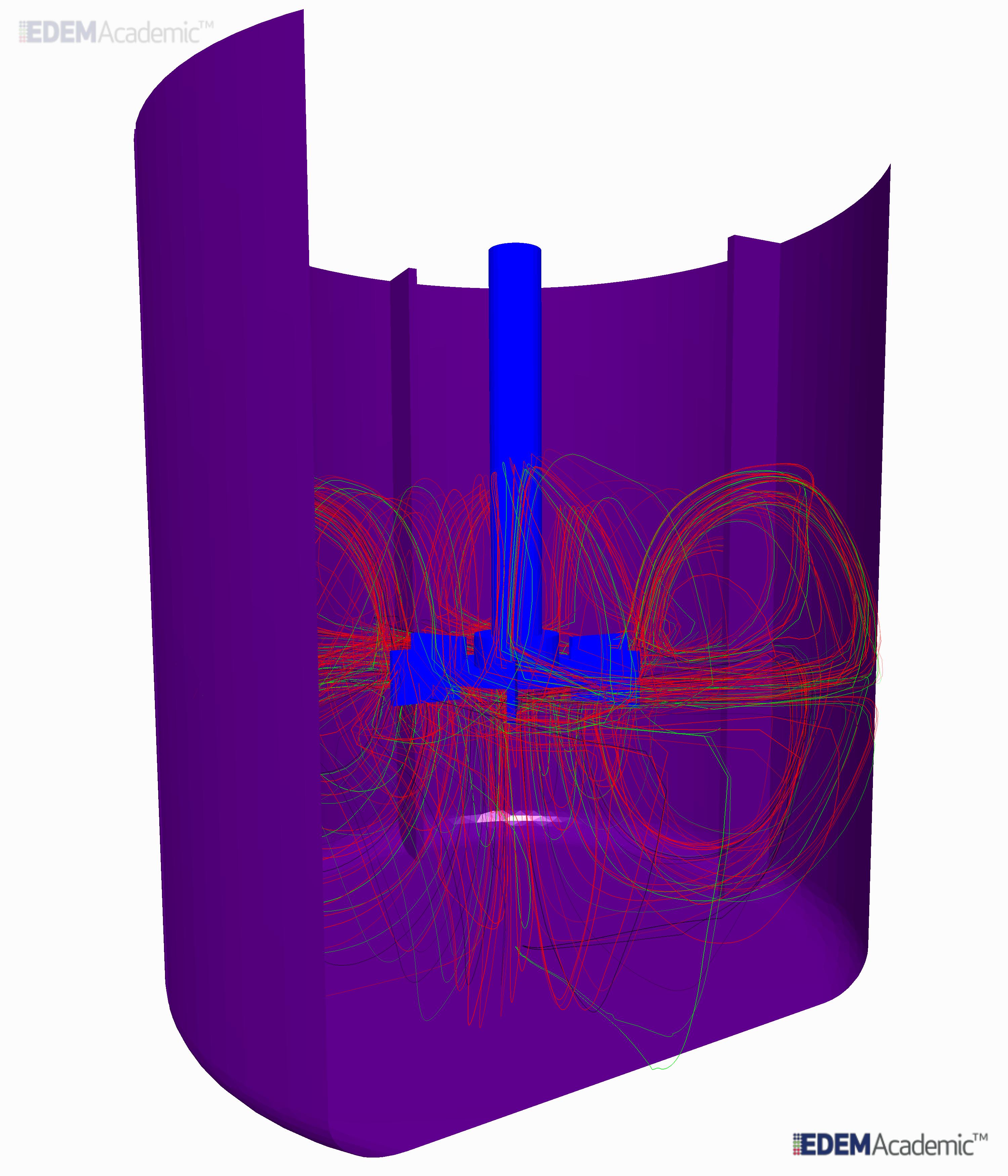
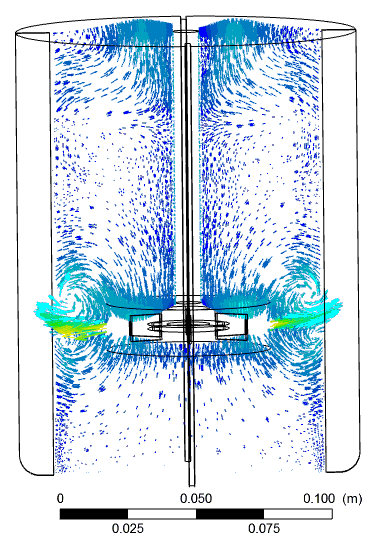
One study used a Rushton-impeller stirred-water system. A flow field calculated in ANSYS CFX was passed to a DEM particle model, and the resulting trajectories were compared with positron emission particle tracking (PEPT).
What one-way coupling assumes
In the archived workflow, a calculated fluid field supplies forces to the particle simulation. In a one-way coupling, particles respond to the fluid, but their effect on the fluid is not fed back into that solution.
This distinction matters when interpreting results. A method suited to a dilute tracking experiment may require additional modelling when applied to a densely loaded slurry or a strongly interacting particle bed.
Gravity and centrifugal separation
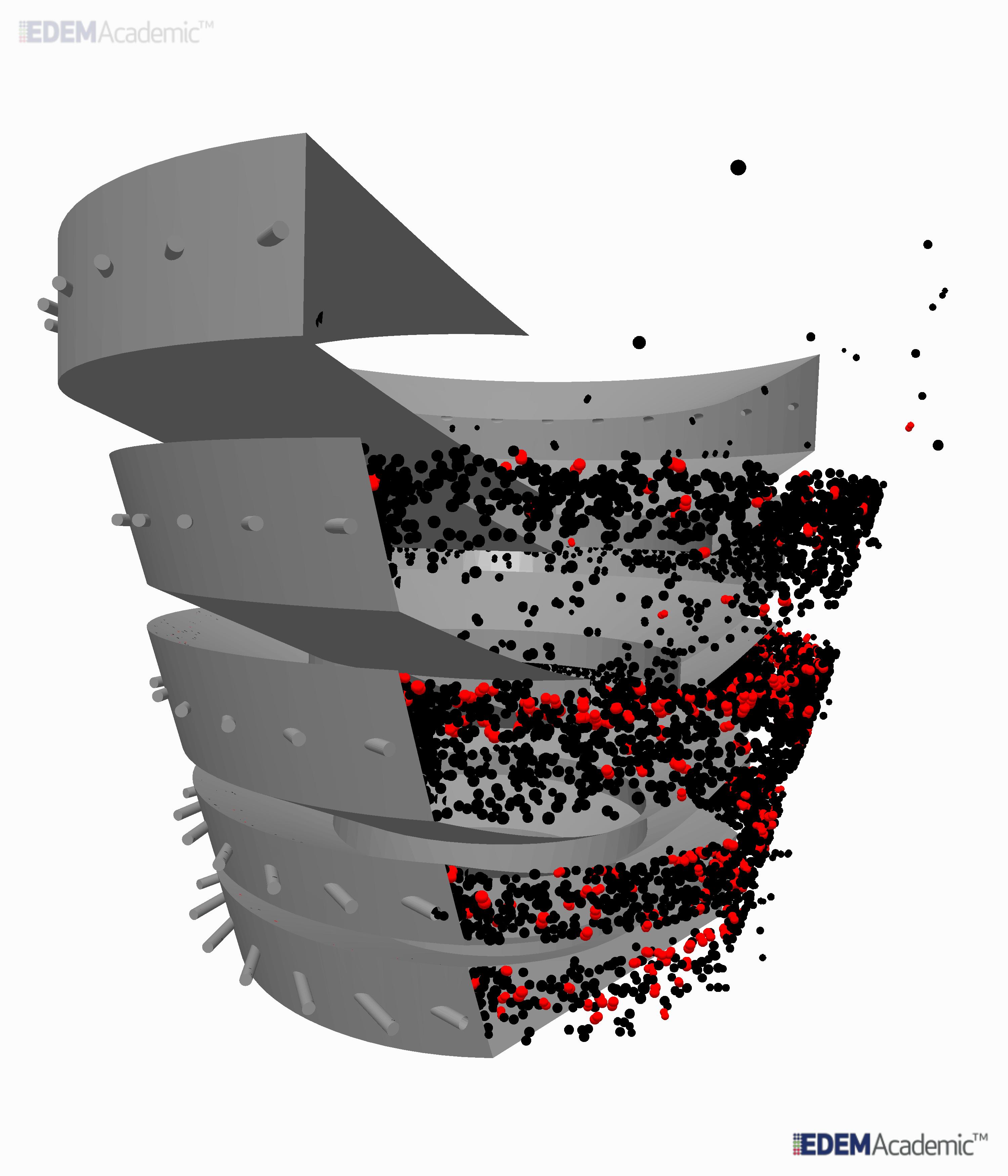
Gravity concentrators separate particles through differences in their response to the flow and applied forces. The archive includes a Knelson concentrator study, alongside a Falcon concentrator model developed using CFX and EDEM.
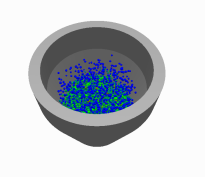
In the Falcon project, a 1,700 rpm rotating system was investigated to understand the separation of gold from lower-density particles. The coupled workflow helps connect equipment geometry and fluid motion with the paths of individual grains.
Wear in tailings transport
Particle–wall impacts can gradually damage pipes transporting abrasive tailings. DEM offers a way to examine where particles contact the wall and how contact patterns relate to equipment geometry.
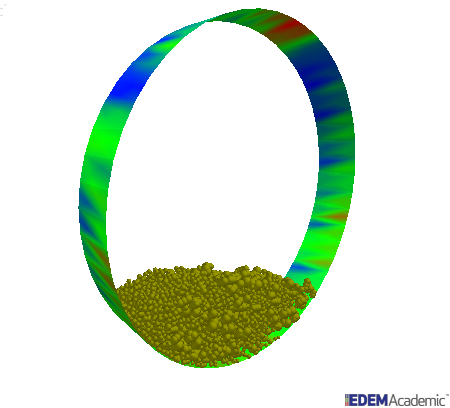
This research theme connects mineral processing with the wider work on abrasion, drill-bit wear, and contact mechanics.
Figures and research media from the original research archive (opens in a new tab). Research affiliations and project descriptions refer to the periods in which the work was undertaken.