Computational materials research

Metal powder.
Supersonic impact.
Solid-state bonds.

Exploring cold spray from the particle scale up—using numerical models to reveal how velocity, stress, and material response shape a deposit before the first experiment runs.

Particle impact stress simulation at 500 metres per second
SIM / 01IMPACT STRESS
500m/s
ProcessSolid-state deposition
ScaleParticle → deposit
MethodNumerical modeling
Impact mechanicsMaterial responseProcess windowsDeposit formation Impact mechanicsMaterial responseProcess windowsDeposit formation

The process, decoded

Cold spray builds with kinetic energy, not a melt pool.

01

Accelerate

Compressed gas drives micron-scale powder through a converging-diverging nozzle.

300–1200
m/s
02

Impact

Particles remain solid, then deform intensely at the particle–substrate interface.

µs
timescale
03

Bond

Surface films rupture, fresh metal is exposed, and successive impacts build the deposit.

layer
by layer

Original simulation archive

Two impacts.
Two views into deposition.

Preserved from the original research page and reframed with the questions that make each model useful: where stress concentrates, how material response evolves, and what changes with velocity.
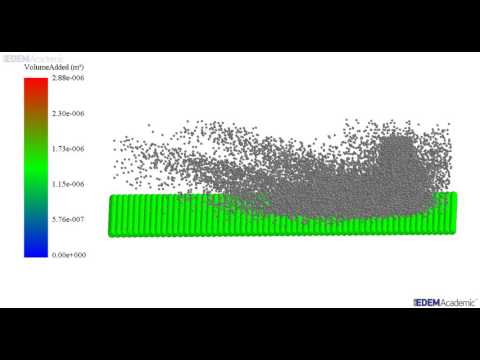
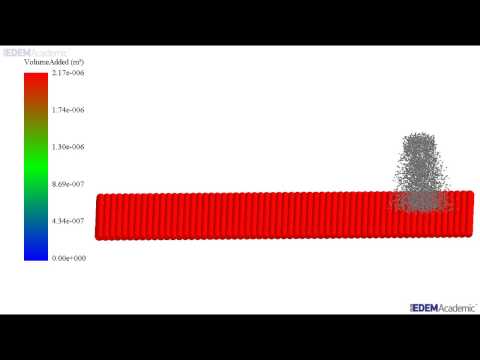
Stress field simulation thumbnail 01 Play simulation

Impact stress / 500 m·s⁻¹

Reading the stress field

The model follows the evolving stress distribution as particles strike and deform against the substrate.

  • Stress localization
  • Particle–substrate interaction
  • Early deposit formation
Cold spray particle impact simulation at 600 metres per second 02 Play simulation

Particle impact / 600 m·s⁻¹

Following material response

A higher-velocity impact sequence makes the deformation front and progressive build-up easier to compare.

  • High-strain-rate deformation
  • Velocity sensitivity
  • Layer-by-layer behavior

Where the field is moving

From individual splats to predictable manufacturing.

B

Stronger deposits

Design strength without giving away ductility.

Pre-process, in-process, and post-process strategies are being combined to reduce porosity and incomplete bonding.

Review, 2024
C

Large-scale geometry

Control shape while deposition stays fast.

Toolpaths, robot kinematics, stand-off distance, and local process conditions are converging into more accurate 3D builds.

Additive Manufacturing, 2024
Close view of a simulated particle stream meeting a substrate Simulation still / original research archive

Research perspective

“The useful model is not the one with the most detail. It is the one that makes the next experiment smarter.”

Selected reading

Sources behind the update.

Recent and foundational material used to refresh the research context on this page.

  1. 01Particle morphology, flight, impact, and bonding in titanium cold sprayNIST · 2025
  2. 02Towards high-strength cold spray additive manufactured metalsJMST · 2024
  3. 033D volume construction methodology for cold spray additive manufacturingAdditive Manufacturing · 2024
  4. 04Cold spray additive manufacturing of permanent magnetsNRC Canada